

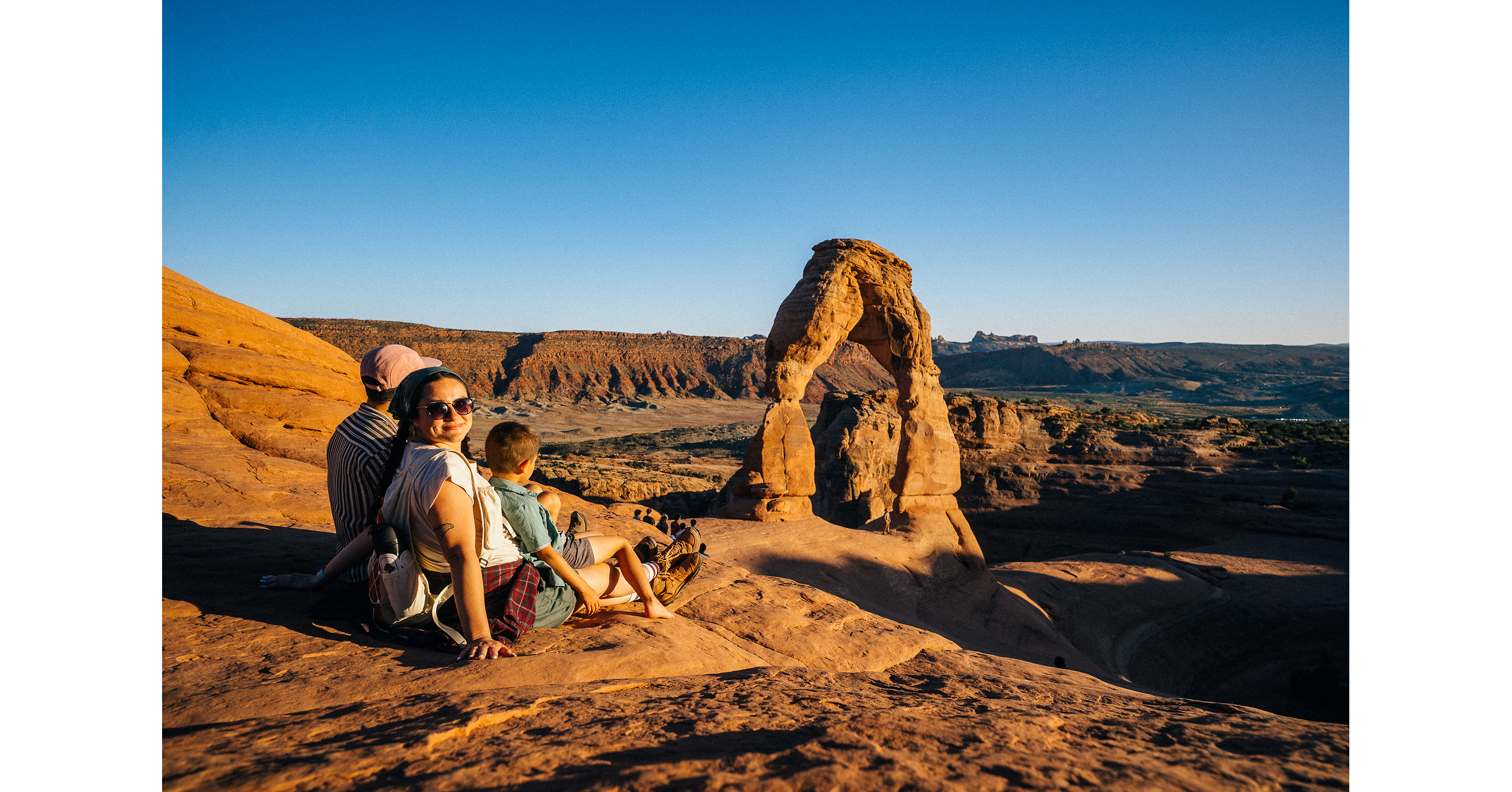
The new shuttle transforms how visitors access the park, and simplifies access to the most visited areas
MOAB, Utah, Sept. 1, 2026 / — Moab, Utah has announced a new, free shuttle system, launching today, offering visitors an alternative to driving to the park’s most popular hikes, and helping to create an easy way to skip the line and forego parking altogether. The shuttle will operate as a pilot program through October 31, 2026, then resume March 1 through June 30, 2027.
The new, optional shuttle service includes two routes: an intra-park option connecting Arches Visitor Center with The Windows and Delicate Arch, and a downtown route connecting the Visitor Center with four stops in Moab — the Transit Hub, Moab Rock Shop, Moab Information Center and Maverick Gas.
Visitors can find parking independently in downtown Moab and walk to any of the four shuttle stops, or park at easily accessible Lions Park. Alternatively, guests can drive directly to the Arches Visitor Center and connect to the intra-park route.
Shuttles will run daily beginning at 8:00 a.m., operating at 15- to 30-minute intervals. The last shuttle from the Delicate Arch Trailhead leaves at 4:05 p.m., and the final departure from the Arches Visitor Center, returning to town, is at 5:10 p.m.
The shuttle is entirely free to ride. Visitors must purchase a National Park pass ahead of time, which will be checked by the driver at pickup locations. Passes can be purchased online or at the Moab Information Center.
For more information on Arches National Park’s shuttle, visit discovermoab.com/places-to-go/national-parks/arches-national-park/arches-shuttle/.
About Moab Office of Tourism
The Moab Office of Tourism is a department within Grand County Utah’s local government unit, and is the official Destination Marketing Organization of the area. Grand County has a population of 9,700 residents in 3,700 square miles. Its largest municipality is Moab, Utah (population 5,200), a gateway town to two national parks (Arches and Canyonlands), two state parks (Dead Horse Point and Utahraptor), over 3 million acres of public lands, and the Colorado River. The area sees an estimated 2.5 million visitors annually.
SOURCE Moab Office of Tourism
